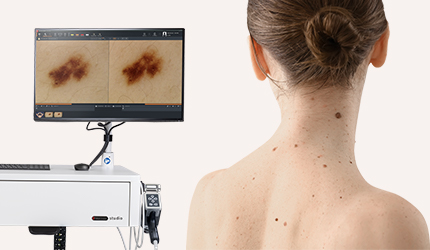
Early detection of skin melanoma is essential: it offers a better chance of cure. It consists of regularly examining your skin yourself to spot any suspicious lesion.
PPRACTICE REGULAR SKIN SELF-EXAM
Le meilleur moyen de détecter très précocement un mélanome est l’auto-examen de la peau
L’auto-examen de la peau est recommandé une fois tous les trois mois, notamment si vous présentez un ou plusieurs facteurs de risque de mélanome.
Practice this self-exam regularly, by checking every part of your body, from head to toe. It helps you spot any suspicious lesion early and get familiar with your skin, your moles, and your freckles.
What may worry you:
An old skin lesion that starts bleeding when touched, grows, or changes;
A wound that does not heal;
A brown spot or a bump that appears on the skin and persists;
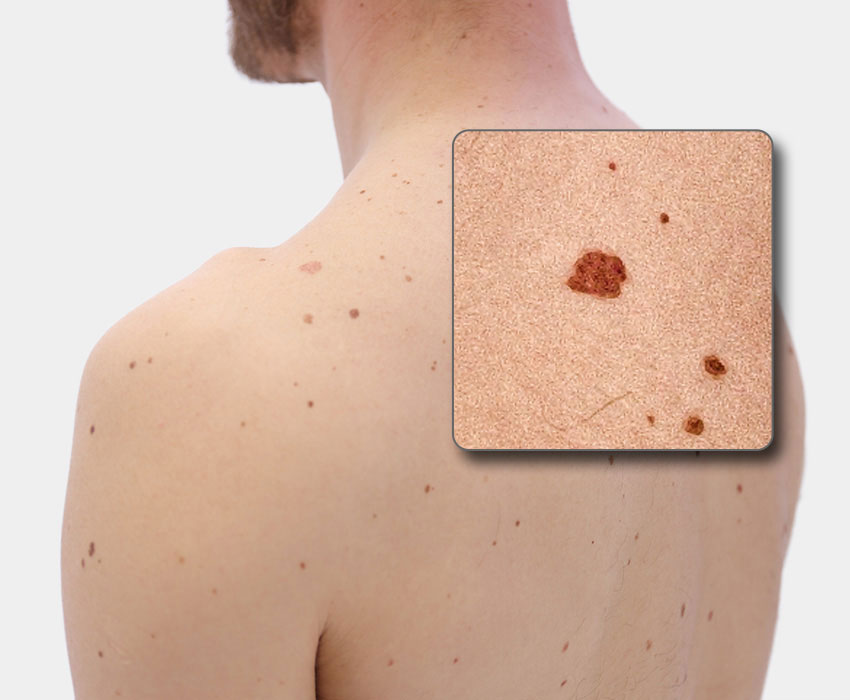
A mole that is different from the others. All a person’s moles look alike.
So the one that “is not like the others” should catch your attention. This is the “ugly duckling” principle;
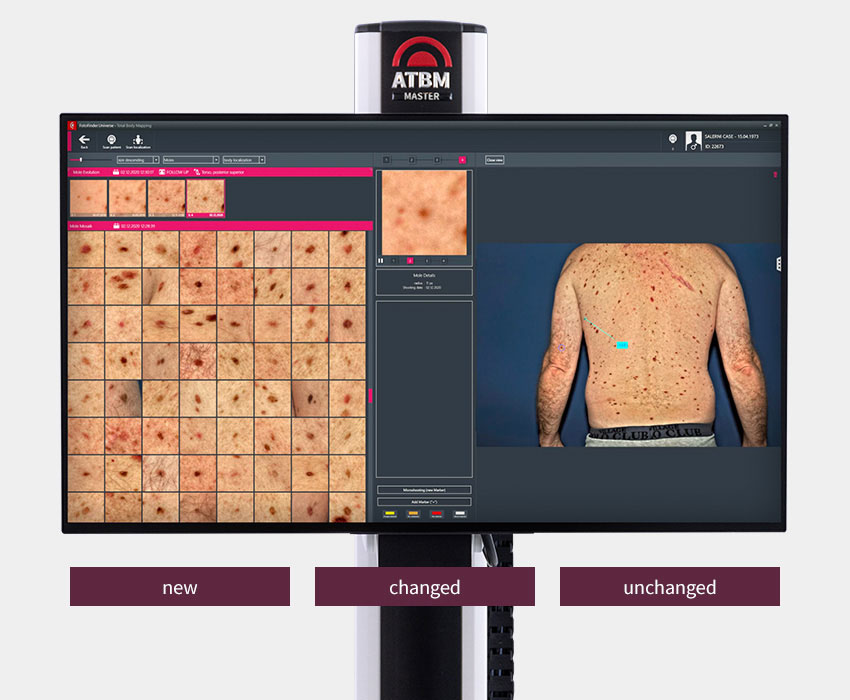
A mole that changes appearance quickly (in its shape, size, color, or thickness).
Use the ABCDE criteria.
The “rule ABCDE ” can help you recognize warning signs:
A for Asymmetry: the mole is not regular, nor round, nor oval, and its raised areas are not distributed evenly around its center;
B like Irregular edges: its edges are irregular and poorly defined ;
C like Color: it shows several colors (black, blue, brown, red or white) ;
D like Diameter: it is large (more than 6 mm) ;
E like Evolution: it changes and grows, changes in thickness and color.
The presence of one or more of these signs does not necessarily mean you have a melanoma, but it does justify seeking a medical opinion without waiting.